The Silencing Effect: How Restrictive School Policies Are Strangling Student Communication
Jan 7, 2026
|
7
min read
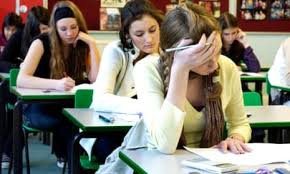
Walk through any modern school during passing period and you'll witness a peculiar silence. Not the quiet of focus, but the hush of restriction. Students move in pods, eyes on phones, airpods sealing their ears, mouths closed. The lively debates, spontaneous collaborations, and hallway negotiations that once defined school culture have been replaced by a regulated quiet enforced by policies designed to control rather than connect.
This isn't just a shift in student behavior—it's the systematic dismantling of social learning environments. And the consequences extend far beyond quiet hallways.
The Communication Crunch: Policies That Isolate
The Digital Divide Within Physical Spaces
Schools have become physical spaces with digital barriers:
Phone bans that eliminate spontaneous coordination
Headphone policies that create auditory isolation
Social media blocks that prevent organic community formation
Collaboration restrictions during free periods
Silent lunch policies in some districts
The Unintended Consequence
What administrators call "reducing distraction," students experience as social fragmentation. The very tools that facilitate modern communication are banned, creating a generation that's digitally fluent everywhere except where they spend most of their waking hours.
The Four Communication Skills Being Systematically Undermined
Skill 1: Spontaneous Collaboration
Traditional School Culture: Study groups forming organically, homework help in hallways, project planning during lunch
Current Reality: Scheduled, supervised collaboration only; natural teamwork penalized as "off-task behavior"
The Loss: Students aren't learning to initiate collaboration—they're learning to wait for permission to work together.
Skill 2: Conflict Resolution Through Dialogue
Natural Development: Working through disagreements, negotiating differences, finding compromise
Policy Reality: Conflicts go underground or escalate to authority intervention
The Loss: Students learn avoidance or escalation rather than resolution. They become adults who email HR instead of talking to colleagues.
Skill 3: Cross-Group Communication
Healthy Environment: Different friend groups mingling, interests bridging social divides
Restrictive Climate: Students stick to known groups; branching out feels risky in surveilled spaces
The Loss: The social agility needed for diverse workplaces and communities never develops.
Skill 4: Informal Leadership
Organic Development: Natural leaders emerging in unstructured settings
Controlled Environment: Leadership only recognized in official roles (club president, team captain)
The Loss: Situational leadership—the ability to lead when needed, follow when appropriate—isn't practiced.
The Data Speaks: What Research Shows
Study 1: The Social Skill Decline (University of Texas, 2025)
Students in highly restrictive schools showed:
47% fewer spontaneous collaborative interactions
52% more reliance on teachers to mediate peer conflicts
38% smaller social networks than students in less restrictive schools
Significant anxiety about initiating peer communication
Study 2: The Workplace Preparedness Gap (Harvard Business Review, 2026)
Employers reported new graduates from restrictive school environments struggled with:
Initiating collaboration without explicit instruction
Navigating office politics and informal networks
Giving and receiving peer feedback
Building rapport outside structured meetings
Study 3: The Mental Health Connection (American Psychological Association, 2025)
Students in schools with social interaction restrictions showed:
34% higher rates of loneliness
41% more difficulty making new friends
28% higher social anxiety in unstructured settings
Lower sense of school belonging and community
The Learnsphere Alternative: Communication Incubators
What Restriction Creates vs. What Connection Cultivates
Restrictive Policies Create:
Compliance-focused behavior
Risk aversion in social interactions
Dependence on authority for conflict resolution
Superficial, transactional relationships
Learnsphere Cultivates:
Natural Communication Labs: Games requiring constant coordination
Low-Stakes Social Practice: Digital spaces for trying communication styles
Conflict Resolution Simulations: Gaming disagreements as practice for real ones
Cross-Group Connection: Teams forming across traditional social boundaries
Our Communication Restoration Framework
1. Structured Spontaneity
Our gaming environments create purposeful unpredictability that demands:
Quick decision communication
Adaptive coordination
Real-time problem-solving dialogue
2. Digital-Physical Bridges
We help students transfer digital communication skills to in-person contexts through:
Post-game reflection on communication strategies
Encouraging IRL collaboration based on gaming partnerships
Teaching translation of digital teamwork to classroom projects
3. Conflict Navigation Training
Games naturally create disagreements about strategy. We teach students to:
Frame conflicts as strategy differences rather than personal attacks
Use "I think we should..." instead of "You're wrong..."
Find compromise through experimentation rather than argument
4. Leadership Rotation
Different games require different leadership styles. Students learn:
When to lead based on their strengths
How to follow when others have better approaches
Flexible role-taking based on situation, not status
Teacher Perspectives: The Dilemma of Enforcement
The Educator's Conflict
Mr. Henderson, High School Teacher: "I'm told to prepare students for collaborative workplaces, then given policies that prevent natural collaboration. I'm creating group projects in a culture that penalizes unsanctioned group work."
Ms. Chen, Middle School Counselor: "Students come to me with social anxiety, but the school environment creates that anxiety. Every interaction feels monitored, every friendship needs explaining. No wonder they're anxious."
Coach Williams, Athletic Director: "My athletes communicate beautifully on the field. Then they enter the building and become silent. We're teaching them to turn their social skills on and off based on location."
The Progressive Solution Emerging
Some schools are implementing communication zones:
Collaboration Corners: Designated spaces for spontaneous group work
Digital Communication Hours: Specific times when educational messaging is allowed
Peer Mediation Programs: Students trained to help resolve conflicts
Unstructured Social Time: Protected periods without scheduled activities
Student Voices: The Human Cost
The Silent Majority Speaks
"I had a brilliant idea for our history project during lunch, but we're not allowed to talk about schoolwork during lunch. By the time class came, I'd forgotten it." — Alex, 11th Grade
"I made my best friend in study hall because we were both playing the same game. Now they've banned all gaming during study hall. Where are we supposed to make friends?" — Maya, 9th Grade
"In elementary school, we solved problems by talking. Now everything goes through a teacher or principal. We're not learning to solve anything ourselves." — Jordan, 10th Grade
"My social anxiety got worse in high school because every interaction feels like it might be against the rules. Is this too loud? Is this the right place? Is this allowed?" — Taylor, 12th Grade
The Developmental Timeline: What's Being Missed
Middle School: The Collaboration Foundation
Critical Development: Learning to work with diverse peers
Restrictive Reality: Limited mixed-group opportunities, enforced silence
Long-Term Impact: Difficulty with diverse teams in college and career
Early High School: The Leadership Emergence
Critical Development: Taking initiative in peer contexts
Restrictive Reality: Leadership only recognized in official capacities
Long-Term Impact: Reluctance to step up in ambiguous situations
Late High School: The Professional Preparation
Critical Development: Navigating complex social systems
Restrictive Reality: Simplified, controlled social environments
Long-Term Impact: Workplace culture shock and missteps
The Economic Consequences: Workplace Readiness Crisis
What Employers Are Seeing
Tech Startup CEO: "New hires can code brilliantly but can't articulate their ideas in meetings. They wait to be called on like they're still in class."
Hospital Administrator: "Young nurses follow protocols perfectly but struggle with the team coordination needed during emergencies. They're waiting for someone to tell them what to do."
Marketing Director: "The creativity is there, but the collaborative refinement isn't. They treat feedback as criticism rather than collaboration."
The Skills Gap Created
Schools focusing on individual achievement are producing graduates who lack:
Peer-to-peer persuasion skills
Lateral leadership abilities
Informal network building
Spontaneous problem-solving with colleagues
The Learnsphere Restoration Project
How We're Rebuilding Communication Skills
1. The Digital Water Cooler
Our chat features create spaces for:
Casual idea sharing
Spontaneous problem-solving
Interest-based community building
Low-pressure social practice
2. The Collaboration Gym
Games requiring:
Constant verbal coordination
Role negotiation
Strategic debate
Collective decision-making
3. The Conflict Dojo
Safe spaces to practice:
Disagreeing respectfully
Navigating different perspectives
Finding compromise
Repairing misunderstandings
4. The Leadership Laboratory
Environments where:
Different leadership styles can emerge
Followership is valued and practiced
Role fluidity is required
Success depends on distributed leadership
The Parental Dilemma: Social Development vs. Academic Focus
The Concern Spectrum
Anxious Parents: "I want my child focused on academics, not socializing."
Progressive Parents: "Social skills are academics. They determine career success."
The Research Reality
Studies show students with strong social skills:
Perform better academically (collaborative learning)
Have better mental health (social support)
Achieve more professionally (networking and teamwork)
Report higher life satisfaction (meaningful relationships)
The New Conversation
Instead of: "Are they socializing instead of studying?"
We need: "Are they developing the communication skills needed for study, work, and life?"
The Path Forward: Policies That Connect Rather Than Control
Recommendations for Schools
1. Differentiate Between Disruption and Development
Noise during collaboration ≠ disruption
Social coordination ≠ off-task behavior
Peer teaching ≠ cheating
2. Create Communication-Friendly Zones
Designated collaboration spaces
Protected social time
Digital communication channels for educational purposes
3. Teach Communication Explicitly
Conflict resolution curriculum
Collaboration skill development
Digital citizenship that includes social connection
4. Measure What Matters
Track social skill development alongside academic progress
Survey student sense of community and belonging
Assess collaborative abilities, not just individual achievement
The Learnsphere Partnership Model
We work with schools to:
Audit communication opportunities in current policies
Design communication-rich environments within existing constraints
Train teachers to facilitate rather than control social learning
Provide digital spaces for safe communication practice
Track social skill development with concrete metrics
The Urgent Need for Change
We're at a critical juncture. The restrictive policies implemented with good intentions—to reduce distraction, prevent bullying, maintain order—are having devastating unintended consequences:
We're producing students who can solve equations in silence but can't articulate ideas in meetings.
We're graduating individuals who follow rules perfectly but can't navigate ambiguous social situations.
We're educating young people who excel individually but struggle collectively.
The most dangerous restriction isn't on devices or talking—it's on practice. Communication, like any skill, requires practice. And we're systematically removing the practice fields.
A Call for Communication Restoration
The solution isn't abandoning all rules. It's designing environments where communication can flourish within purposeful structure. It's recognizing that social development isn't a distraction from learning—it's foundational to learning.
Learnsphere represents one pathway forward: using the engagement of gaming to create communication-rich learning environments where students practice the very skills restrictive policies are eliminating.
Because the future belongs not to those who know the most, but to those who can share, collaborate, and build with others most effectively. And those skills aren't developed in silence.
Ready to join the communication restoration movement? Learnsphere offers a space where students can practice the articulation, collaboration, and social navigation skills that restrictive policies are eliminating from traditional school environments.
Because the most important thing students learn in school shouldn't be how to be quiet—it should be how to connect, collaborate, and communicate effectively in an increasingly connected world.